Professional Solutions
Premium products at an affordable price

Find the right Solar Street Lights for you

Solar Street Lights

that have you covered

NOW ON SALE

100% Quality Assured

Unfortunately, there are no products that match your criteria

Shop Solar Street Lights in Kenya

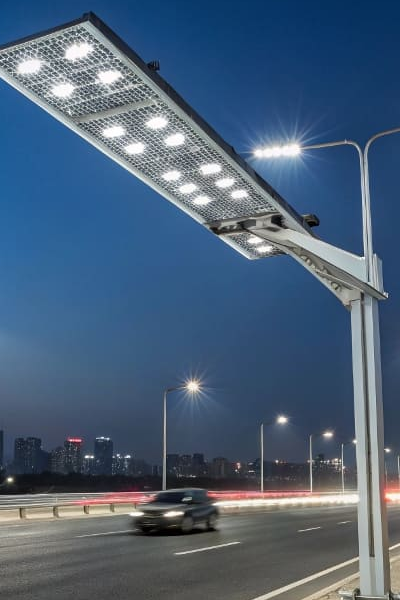
Illuminate roads, pathways and large outdoor spaces with dependable solar street lights from Wayad Connect. Our range includes solar-powered street lighting solutions for residential estates, access roads, parking areas, schools, farms, commercial compounds and remote locations. A solar street lamp collects energy from sunlight during the day and stores it in a rechargeable battery. The stored energy powers the LED light after dark, reducing reliance on mains electricity and extensive underground cabling. Whether you need lighting for an estate road, business entrance, pedestrian pathway or rural property, Wayad Connect offers solar street lights for different brightness, mounting and operating requirements across Kenya.

How Solar Street Lights Work

Solar street lights normally consist of:
  • A solar panel
  • Rechargeable battery
  • LED street lamp
  • Charge controller
  • Automatic light sensor
  • Motion sensor on selected models
  • Mounting brackets
  • Street-light pole
  • Connecting cables on split systems
  • Remote control on selected products
During the day, the solar panel converts sunlight into electrical energy and stores it in the battery. When natural light reduces, the street lamp switches on automatically and uses the stored energy to provide illumination. The exact operating sequence and available lighting modes vary between models.

Types of Solar Street Lights

Solar street lighting systems are available in different designs and configurations.

All-in-One Solar Street Lights

All-in-one solar street lights combine the solar panel, battery, LED lamp and control system within one integrated unit. Benefits may include:
  • Compact design
  • Fewer external cables
  • Easier installation
  • Reduced component separation
  • Simple maintenance
  • Automatic lighting control
The complete unit should be installed where its solar panel can receive sufficient direct sunlight.

Split-Type Solar Street Lights

Split-type systems have separate solar panels, batteries and LED lamps connected through cables. This design allows each component to be positioned according to the installation requirements. For example, the solar panel can face the best direction for sunlight while the lamp is positioned to illuminate the road. Split systems may be suitable for larger projects or installations requiring greater flexibility.

Motion-Sensor Solar Street Lights

Motion-sensor models adjust their brightness when movement is detected. Depending on the product, the light may:
  • Remain at low brightness and increase when movement is detected
  • Switch on only when someone approaches
  • Return to energy-saving mode after a set period
  • Operate at different brightness levels throughout the night
  • Allow sensor sensitivity adjustment
Motion-sensor operation can help conserve stored battery power.

Dusk-to-Dawn Solar Street Lamps

A dusk-to-dawn solar street lamp switches on automatically at night and switches off when daylight returns. These lights are suitable for locations that require regular overnight illumination, including:
  • Residential estates
  • Roads and access routes
  • Schools
  • Hospitals
  • Parking areas
  • Hotels
  • Commercial compounds
  • Rural centres
Operating time depends on battery capacity, solar charging, brightness settings and weather conditions.

Solar Street Lights for Roads

Solar street lights can be installed along roads where mains electricity is unavailable or where conventional cabling would be costly. They may be suitable for:
  • Estate roads
  • Rural roads
  • Private access roads
  • Driveways
  • Industrial access routes
  • Hotel and lodge roads
  • Farm roads
  • Construction access areas
The number of lights required depends on the road width, pole height, spacing, brightness and beam coverage. A professional lighting assessment is recommended for larger road projects.

Solar Street Lights for Residential Estates

Residential estates can use solar street lighting to improve visibility along:
  • Internal roads
  • Pedestrian pathways
  • Gates
  • Parking areas
  • Shared outdoor spaces
  • Perimeter routes
  • Recreational areas
Solar lights can reduce the need for trenching and long electrical cable runs, particularly in newly developed or expanding estates.

Solar Street Lights for Schools and Institutions

Schools, hospitals, colleges and other institutions can install solar street lights around:
  • Entrances
  • Walkways
  • Parking areas
  • Internal roads
  • Staff housing
  • Outdoor gathering spaces
  • Perimeter areas
  • Security points
The appropriate lamp should be selected according to the area size and required hours of operation.

Solar Street Lights for Businesses

Commercial properties can use solar street lighting around:
  • Office compounds
  • Shopping centres
  • Warehouses
  • Hotels
  • Restaurants
  • Factories
  • Construction sites
  • Parking areas
  • Loading zones
  • Security entrances
Larger properties may require several lights positioned strategically to provide consistent outdoor coverage.

Solar Street Lights for Farms and Remote Areas

Solar street lamps are useful in rural or off-grid locations where extending mains electricity may be difficult. Common applications include:
  • Farm entrances
  • Livestock areas
  • Staff housing
  • Storage facilities
  • Water points
  • Security posts
  • Remote pathways
  • Rural trading centres
  • Agricultural compounds
Choose lights with suitable weather resistance, battery capacity and brightness for the installation environment.

How to Choose Solar Street Lights

Consider the following factors before purchasing:
  • Size of the area
  • Road or pathway width
  • Required brightness
  • Pole height
  • Light spacing
  • Solar panel capacity
  • Battery capacity
  • Expected operating time
  • Motion-sensor requirements
  • Lighting modes
  • Integrated or split design
  • Weather-resistance rating
  • Available sunlight
  • Installation environment
Avoid choosing a solar light street light system based only on the advertised wattage. Battery capacity, panel size, LED efficiency and actual illumination coverage are also important.

Understanding Solar Street-Light Brightness

Street-light brightness may be stated in lumens. A higher lumen output generally indicates stronger illumination. However, actual performance also depends on:
  • Beam angle
  • LED quality
  • Mounting height
  • Pole spacing
  • Road width
  • Battery charge
  • Lighting mode
  • Surrounding conditions
The light should provide adequate visibility without creating excessive glare for drivers, pedestrians or nearby properties.

Choosing the Correct Pole Height

Pole height affects the area covered by the light. Lower poles may be suitable for:
  • Pathways
  • Small compounds
  • Garden roads
  • Residential driveways
Higher poles may be required for:
  • Wider roads
  • Parking areas
  • Commercial compounds
  • Industrial spaces
  • Large open areas
The lamp output, beam angle and pole spacing should be considered together.

Solar Panel Capacity

The solar panel must generate enough energy during daylight hours to recharge the battery. Solar charging performance depends on:
  • Panel wattage
  • Hours of direct sunlight
  • Panel angle
  • Weather conditions
  • Shade
  • Panel cleanliness
  • Battery capacity
  • Daily lighting requirements
A panel that is too small may not recharge the battery fully, especially during cloudy periods.

Battery Capacity and Lighting Duration

The battery stores energy for use at night. Operating time depends on:
  • Battery capacity
  • Solar panel output
  • Selected brightness
  • Hours of direct sunlight
  • Motion-sensor activity
  • LED power consumption
  • Battery age
  • Weather conditions
Full-brightness operation throughout the night generally requires more battery capacity than dimmed or motion-controlled operation.

Solar Street-Light Operating Modes

Selected solar street lights may offer operating modes such as:
  • Full brightness throughout the night
  • Reduced brightness after several hours
  • Motion-activated brightness
  • Timed lighting
  • Dusk-to-dawn operation
  • Remote-controlled settings
  • Automatic energy-saving mode
Lighting modes can help balance brightness with battery operating time.

Weather Resistance

Solar street lights should be designed for outdoor exposure. Before purchasing, check the stated protection of:
  • LED lamp
  • Solar panel
  • Battery enclosure
  • Charge controller
  • Cable connections
  • Mounting brackets
The system should be suitable for exposure to rain, dust, heat and changing outdoor conditions.

Installing Solar Street Lights

Installation requirements depend on the light design, pole height and site conditions. A complete installation may involve:
  • Site assessment
  • Pole foundations
  • Pole installation
  • Solar panel positioning
  • Lamp mounting
  • Battery installation
  • Cable connection
  • Sensor configuration
  • Lighting-angle adjustment
  • System testing
Poles should be securely anchored and positioned away from obstructions that may block sunlight or reduce lighting coverage. Professional installation is recommended for elevated, roadside and commercial solar street-light projects.

Maintaining Solar Street Lights

To support dependable performance:
  • Clean solar panels regularly
  • Remove dust, leaves and bird droppings
  • Inspect poles and brackets
  • Check cables for damage
  • Keep sensors unobstructed
  • Monitor changes in brightness
  • Inspect battery enclosures
  • Check for water entry
  • Replace batteries with compatible models
  • Review operating settings periodically
Reduced lighting time may result from shade, dirty panels, poor weather, incorrect settings or ageing batteries.

Buy Solar Street Lights from Wayad Connect

Shop solar street lights in Kenya from Wayad Connect. Explore integrated and split-type solar street lamps for roads, pathways, estates, schools, farms, parking areas and commercial outdoor spaces. Compare brightness, solar panel capacity, battery size, pole requirements, lighting modes and weather resistance to find a suitable solar street-light system for your project.

Frequently Asked Questions

Do solar street lights need electricity?

Solar street lights normally use energy collected from sunlight and do not require a direct mains electricity connection.

Do solar street lamps work during power outages?

Yes. They operate independently of the electricity grid when their batteries have sufficient stored energy.

How long do solar street lights stay on?

Operating time depends on battery capacity, available sunlight, brightness settings, weather conditions and lighting mode.

How far apart should solar street lights be installed?

Spacing depends on pole height, lamp brightness, beam angle and road width. A professional lighting assessment is recommended.

Can solar street lights work during cloudy weather?

They can still charge in reduced sunlight, but prolonged cloudy conditions may reduce brightness or operating time.

What is the difference between all-in-one and split solar street lights?

All-in-one lights combine the main components in one unit, while split systems use separate panels, lamps and batteries for greater installation flexibility.

What causes a solar street light to become dim?

Possible causes include insufficient sunlight, a dirty panel, battery ageing, unsuitable settings, shade or damaged electrical connections.