Professional Solutions
Premium products at an affordable price

Find the right Solar Stand-Alone Lights for you

Solar Stand-Alone Lights

that have you covered

NOW ON SALE

100% Quality Assured

Unfortunately, there are no products that match your criteria

Shop Solar Stand-Alone Lights in Kenya

Illuminate outdoor areas without relying on a direct mains electricity connection using reliable solar stand alone lights from Wayad Connect. These self-contained solar lighting systems combine a solar panel, rechargeable battery, LED light and control components to provide convenient outdoor illumination. Solar stand-alone lights are suitable for residential compounds, pathways, streets, parking areas, farms, schools, commercial properties and remote locations where installing conventional electrical wiring may be difficult or expensive. Whether you need lighting for security, visibility or general outdoor use, Wayad Connect offers solar stand-alone lighting options for different installation environments across Kenya.

What Are Solar Stand-Alone Lights?

Solar stand-alone lights are independent lighting systems powered by energy collected from sunlight. Unlike conventional lights connected to the electricity grid, each unit normally generates, stores and uses its own solar energy. A complete solar stand-alone light may include:
  • Solar panel
  • Rechargeable battery
  • LED light source
  • Charge controller
  • Automatic light sensor
  • Motion sensor on selected models
  • Mounting bracket or pole
  • Remote control on selected products
  • Weather-resistant housing
During the day, the solar panel charges the battery. After dark, the stored energy powers the LED light according to the selected operating mode.

How Solar Stand-Alone Lights Work

Solar stand-alone lights operate through a simple daily cycle. During daylight hours:
  • The solar panel receives sunlight.
  • Solar energy is converted into electricity.
  • The rechargeable battery stores the generated power.
  • The charge controller regulates battery charging.
At night:
  • A built-in sensor detects reduced daylight.
  • The LED light switches on automatically.
  • Stored battery energy powers the light.
  • The light switches off when daylight returns or according to its programmed settings.
Available operating modes vary between products.

Types of Solar Stand-Alone Lights

Solar stand-alone lighting systems are available in different sizes and designs for various outdoor applications.

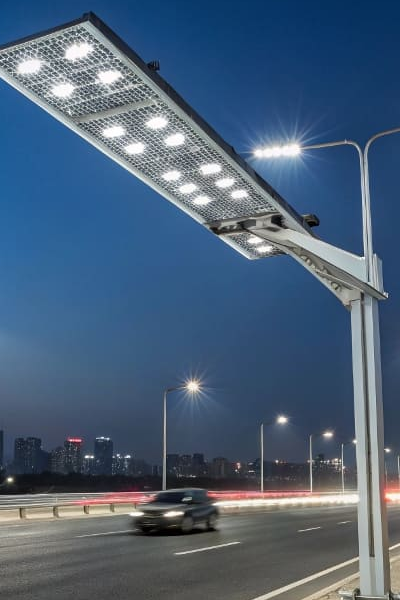
Solar Street Lights

Solar street lights are commonly mounted on poles to illuminate roads, estate streets, pathways, parking areas and public spaces. They may be suitable for:
  • Residential estates
  • Access roads
  • School compounds
  • Hospitals
  • Commercial premises
  • Rural roads
  • Walkways
  • Parking facilities
When selecting a solar street light, consider the road width, mounting height, required brightness and number of operating hours.

Solar Compound Lights

Solar compound lights provide illumination around homes, apartment buildings, offices and commercial properties. They can be installed near:
  • Gates
  • Entrances
  • Perimeter walls
  • Driveways
  • Parking spaces
  • Outdoor corridors
  • Shared residential areas
Motion-sensor models may provide brighter illumination when movement is detected.

Solar Pathway Lights

Solar pathway lights improve visibility along pedestrian routes, garden paths, driveways and building entrances. They may be used around:
  • Homes
  • Hotels
  • Schools
  • Restaurants
  • Apartment developments
  • Landscaped compounds
  • Commercial gardens
The number of lights required will depend on the path length, spacing and required brightness.

Solar Security Lights

Solar security lights help illuminate areas where improved visibility is required after dark. Common installation points include:
  • Gates
  • Doorways
  • Garages
  • Parking areas
  • Perimeter walls
  • Storage areas
  • Farms
  • Security posts
Some models include motion sensors that activate or increase brightness when movement is detected.

Solar Area Lights

Solar area lights provide broader illumination for open outdoor spaces. They may be suitable for:
  • Markets
  • Parking areas
  • Construction sites
  • Farms
  • Warehouses
  • Recreational areas
  • Commercial compounds
  • Remote facilities
Large areas may require several lights positioned strategically to provide consistent coverage.

Integrated Solar Stand-Alone Lights

Integrated solar lights combine the panel, battery and LED fitting within one compact unit. Benefits may include:
  • Fewer external cables
  • Simple installation
  • Compact appearance
  • Reduced installation space
  • Convenient maintenance
Integrated models should be positioned where the solar panel can receive enough sunlight throughout the day.

Split-Type Solar Stand-Alone Lights

Split-type systems have a separate solar panel connected to the light through a cable. This design allows:
  • The solar panel to be positioned in direct sunlight
  • The light to be installed in a shaded area
  • Greater flexibility in mounting
  • Easier adjustment of the solar panel angle
  • Lighting beneath roofs or covered structures
Check the supplied cable length and installation requirements before purchasing.

Motion-Sensor Solar Lights

Motion-sensor solar lights detect movement and adjust their operation automatically. Depending on the model, they may:
  • Remain off until motion is detected
  • Operate at low brightness and increase when movement is detected
  • Switch on at full brightness temporarily
  • Return to a lower setting after a selected period
  • Allow adjustment of the detection range
Motion-sensor operation can help conserve stored battery power.

Dusk-to-Dawn Solar Lights

Dusk-to-dawn solar lights switch on automatically when it becomes dark and switch off when daylight returns. They are suitable for areas that require regular overnight lighting, such as:
  • Residential compounds
  • Estate roads
  • Pathways
  • Business premises
  • Parking areas
  • Schools
  • Hospitals
  • Farms
Operating time depends on battery capacity, solar charging, brightness settings and weather conditions.

Solar Stand-Alone Lights for Homes

Homeowners can use solar stand-alone lights to illuminate:
  • Gates
  • Driveways
  • Gardens
  • Pathways
  • Parking spaces
  • Garages
  • Balconies
  • Perimeter areas
  • Outdoor stairways
  • Compound entrances
They can be useful for locations located far from the main building or where electrical cabling has not been installed.

Solar Stand-Alone Lights for Businesses

Businesses and institutions can install stand-alone solar lights around:
  • Offices
  • Shops
  • Hotels
  • Restaurants
  • Schools
  • Hospitals
  • Warehouses
  • Factories
  • Apartment developments
  • Commercial parking areas
The appropriate lighting system will depend on the size of the property and the level of illumination required.

Solar Stand-Alone Lights for Farms and Remote Areas

Solar lighting is useful in farms and remote locations where grid electricity may be unavailable or unreliable. Applications may include:
  • Farm entrances
  • Livestock areas
  • Equipment stores
  • Water points
  • Staff housing
  • Security posts
  • Remote pathways
  • Rural facilities
  • Agricultural working areas
Choose lights with suitable battery capacity, weather protection and brightness for the intended environment.

How to Choose Solar Stand-Alone Lights

Consider the following factors before purchasing:
  • Size of the area to be illuminated
  • Required brightness
  • Mounting height
  • Solar panel capacity
  • Battery capacity
  • Expected operating time
  • Motion-sensor requirements
  • Dusk-to-dawn operation
  • Integrated or split design
  • Lighting modes
  • Weather-resistance rating
  • Remote-control support
  • Available sunlight
  • Installation environment
A small compound may require one or two lights, while roads, farms and large commercial areas may require several higher-output units.

Understanding Light Brightness

Solar light brightness may be measured in lumens. Higher lumen output generally provides stronger illumination. The appropriate brightness depends on the application:
  • Lower brightness for decorative pathways
  • Moderate brightness for entrances and compounds
  • Higher brightness for parking areas and security locations
  • Broad illumination for roads and commercial spaces
Brightness should be considered together with beam angle, mounting height and the size of the area being covered.

Battery Capacity and Operating Time

The battery stores solar energy for use after dark. Lighting duration depends on:
  • Battery capacity
  • Solar panel output
  • Available sunlight
  • Brightness setting
  • LED power consumption
  • Motion-sensor activity
  • Weather conditions
  • Battery age
  • Operating mode
Continuous full-brightness operation will generally use more stored power than motion-activated or reduced-brightness modes.

Solar Panel Positioning

Correct solar panel placement is essential for dependable charging. For better performance:
  • Install the panel where it receives direct sunlight
  • Avoid shade from buildings and trees
  • Keep the panel clean
  • Follow the recommended installation angle
  • Secure the panel firmly
  • Avoid locations where water collects
  • Consider changing shadows during the year
Poor solar panel placement can reduce charging and shorten the lighting period at night.

Weather-Resistant Solar Lighting

Solar stand-alone lights installed outdoors should have suitable protection against rain, dust and changing weather conditions. Before purchasing, check:
  • Weather-resistance rating
  • Battery enclosure protection
  • Solar panel construction
  • Mounting material
  • Operating-temperature range
  • Corrosion resistance
  • Recommended installation environment
Outdoor-rated products should still be mounted securely and maintained regularly.

Installing Solar Stand-Alone Lights

Installation requirements depend on whether the light is wall-mounted, pole-mounted or ground-mounted. Before installation:
  • Assess the area requiring illumination
  • Confirm the solar panel will receive enough sunlight
  • Determine the correct mounting height
  • Check the beam direction
  • Confirm sensor coverage
  • Secure all brackets and poles
  • Protect external cables
  • Avoid directing bright light into neighbouring properties
  • Follow the manufacturer’s instructions
Large pole-mounted lights should be installed by qualified technicians using suitable foundations and safety equipment.

Maintaining Solar Stand-Alone Lights

To help maintain reliable performance:
  • Clean the solar panel regularly
  • Remove dust, leaves and bird droppings
  • Inspect mounting brackets and poles
  • Keep sensors unobstructed
  • Check cables for damage
  • Monitor changes in brightness
  • Inspect the light for water entry
  • Replace batteries only with compatible models
  • Check remote-control settings
  • Follow the manufacturer’s maintenance instructions
Reduced performance may be caused by shade, dirt, poor weather, battery ageing or unsuitable operating settings.

Buy Solar Stand-Alone Lights from Wayad Connect

Shop solar stand-alone lights in Kenya from Wayad Connect. Explore self-contained solar street lights, compound lights, pathway lights, security lights and area lighting for residential, agricultural and commercial properties. Compare brightness, battery capacity, solar panel size, operating time, sensor features and weather resistance to find suitable solar lighting for your outdoor space.

Frequently Asked Questions

What are solar stand-alone lights?

Solar stand-alone lights are independent lighting systems that use a solar panel and rechargeable battery instead of relying directly on mains electricity.

Do solar stand-alone lights need electrical wiring?

Most models do not require connection to the electricity grid, although some split systems use a cable between the solar panel and light.

Do solar stand-alone lights work during power outages?

Yes. They operate independently of the grid, provided their batteries have received sufficient solar charge.

How long do solar stand-alone lights operate at night?

Operating time depends on battery capacity, sunlight received, brightness settings, weather conditions and the selected lighting mode.

Can solar stand-alone lights work during cloudy weather?

They can still charge in reduced sunlight, but prolonged cloudy conditions may reduce brightness or operating time.

Where should solar stand-alone lights be installed?

Install them where the solar panel receives sufficient sunlight and the light can cover the intended outdoor area effectively.

Are solar stand-alone lights waterproof?

Many models are designed for outdoor use, but weather protection varies. Check the individual product specifications before installation.